Zytrack Webapp
Product design of Zytrack's Shift Scheduling system.
01 Structuring the experience
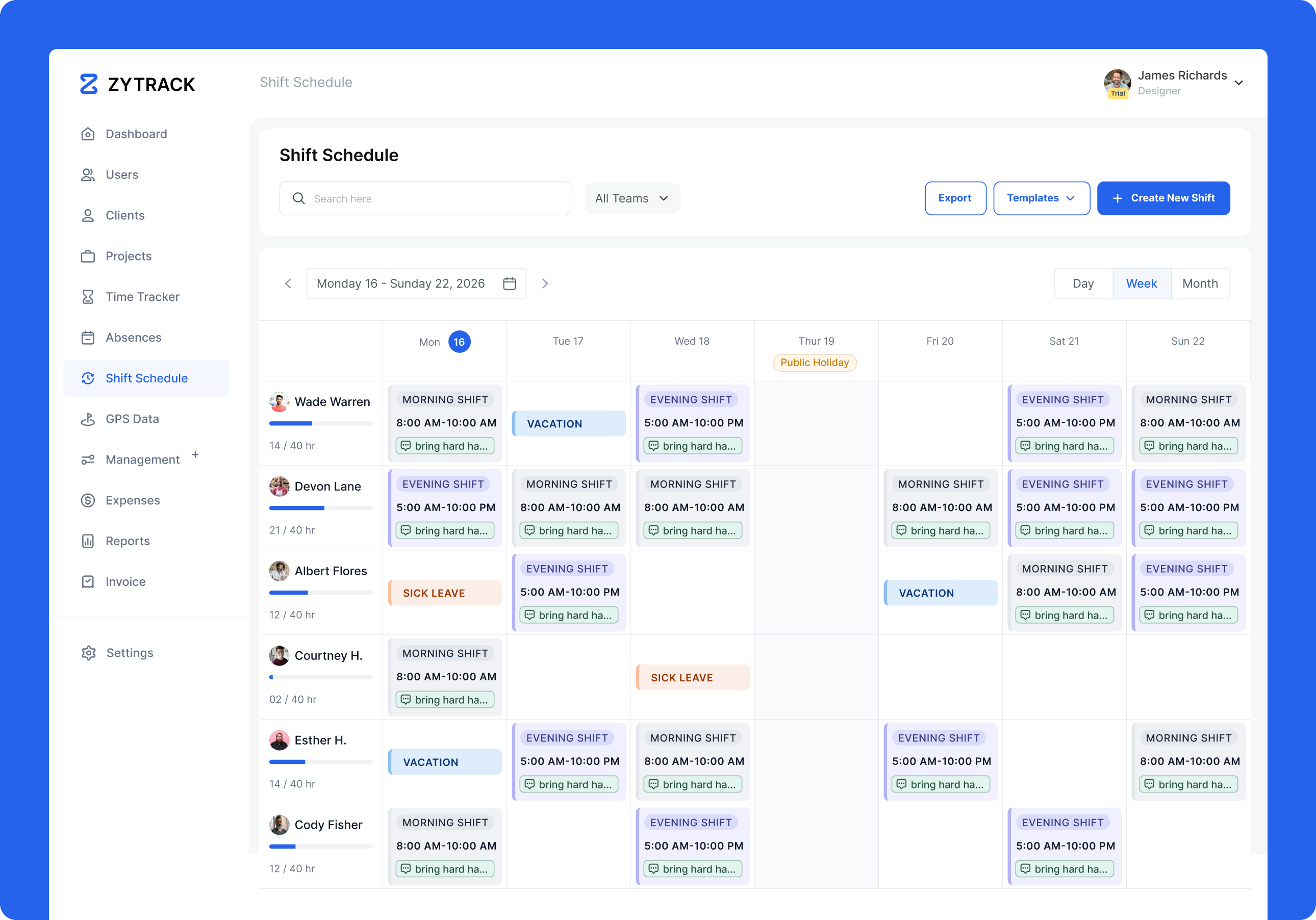
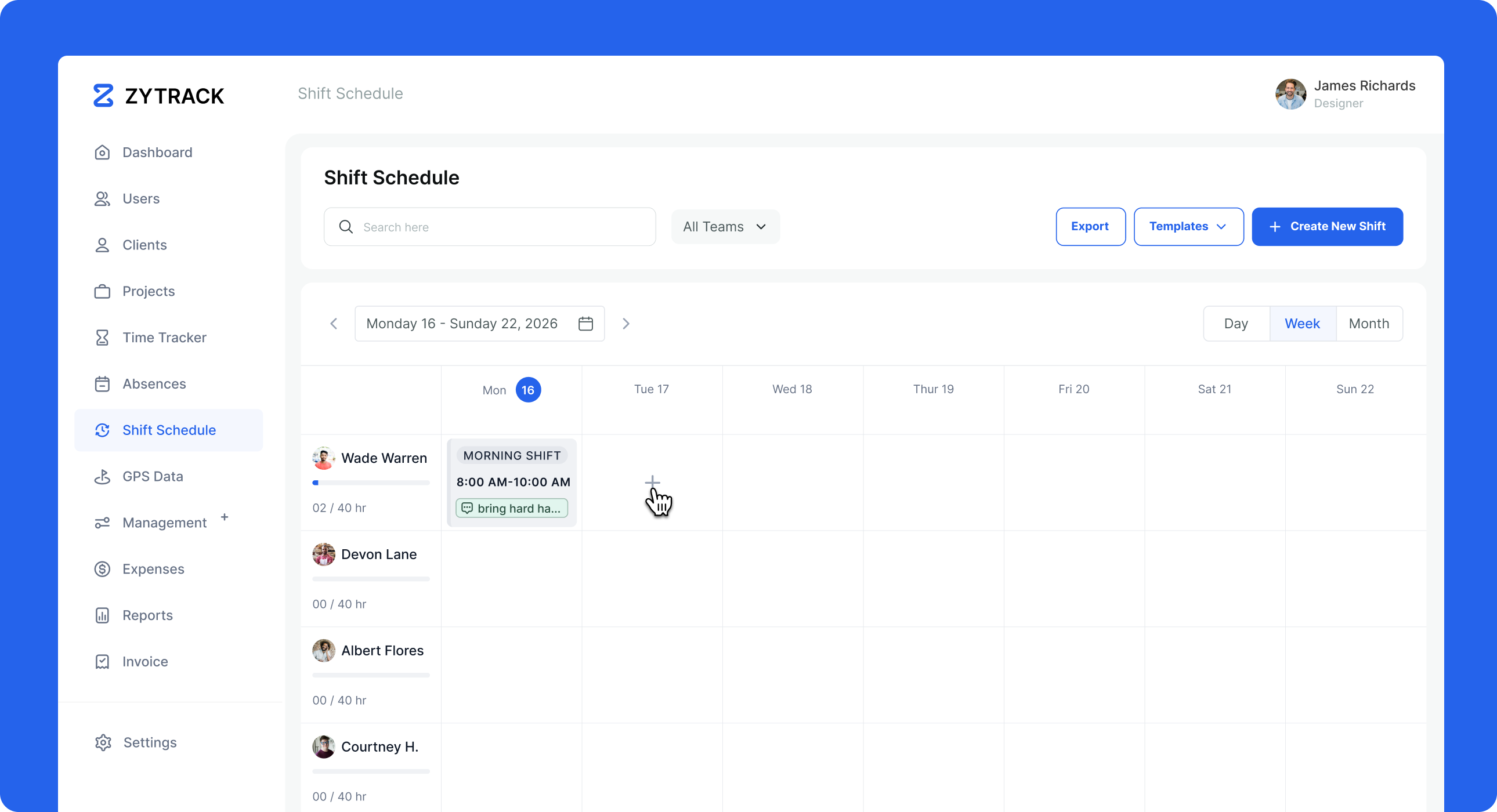
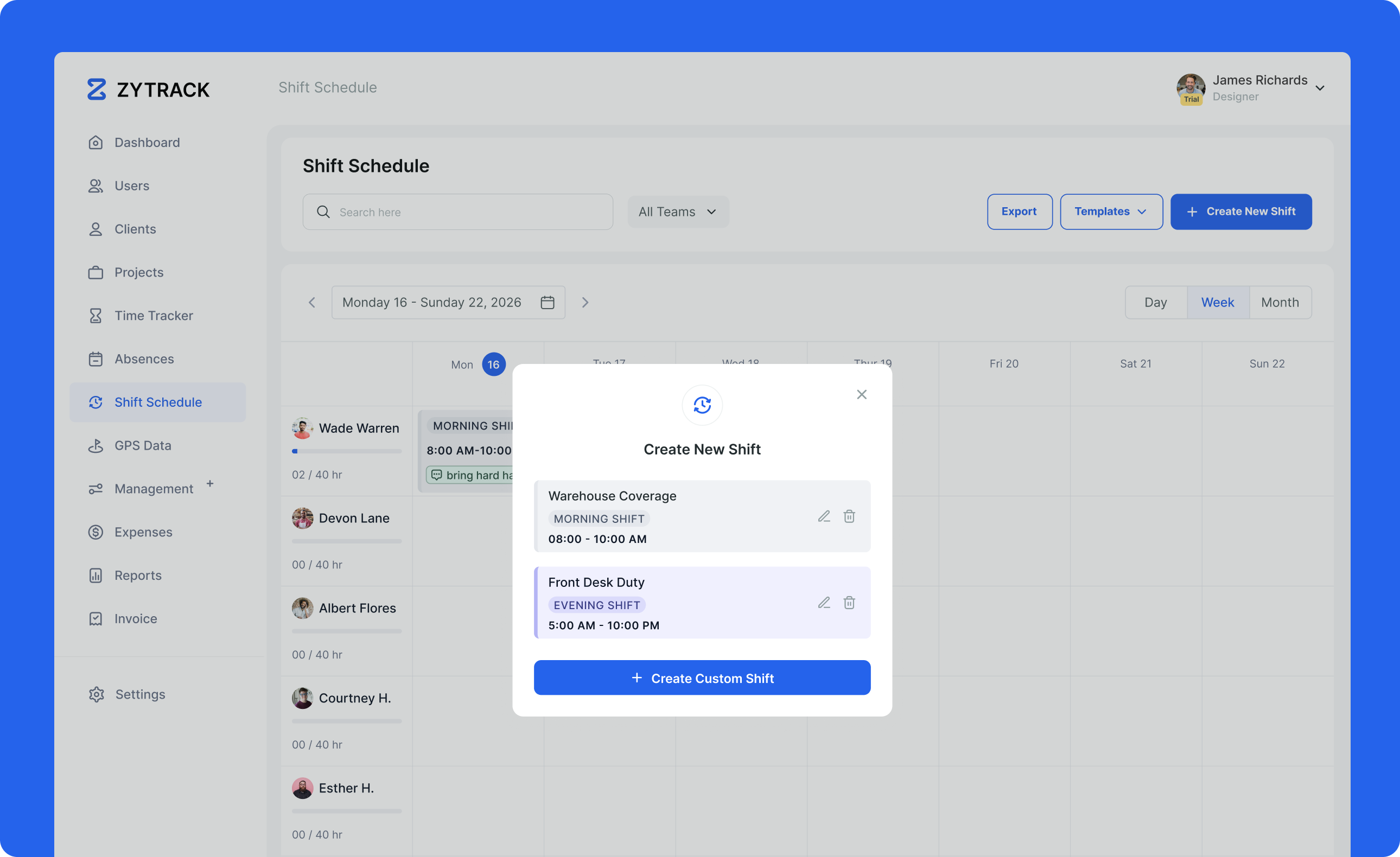
The goal was to introduce shift planning without making Zytrack feel more complex. I structured the experience around the weekly schedule as the primary planning view, with daily and monthly views for different planning needs.
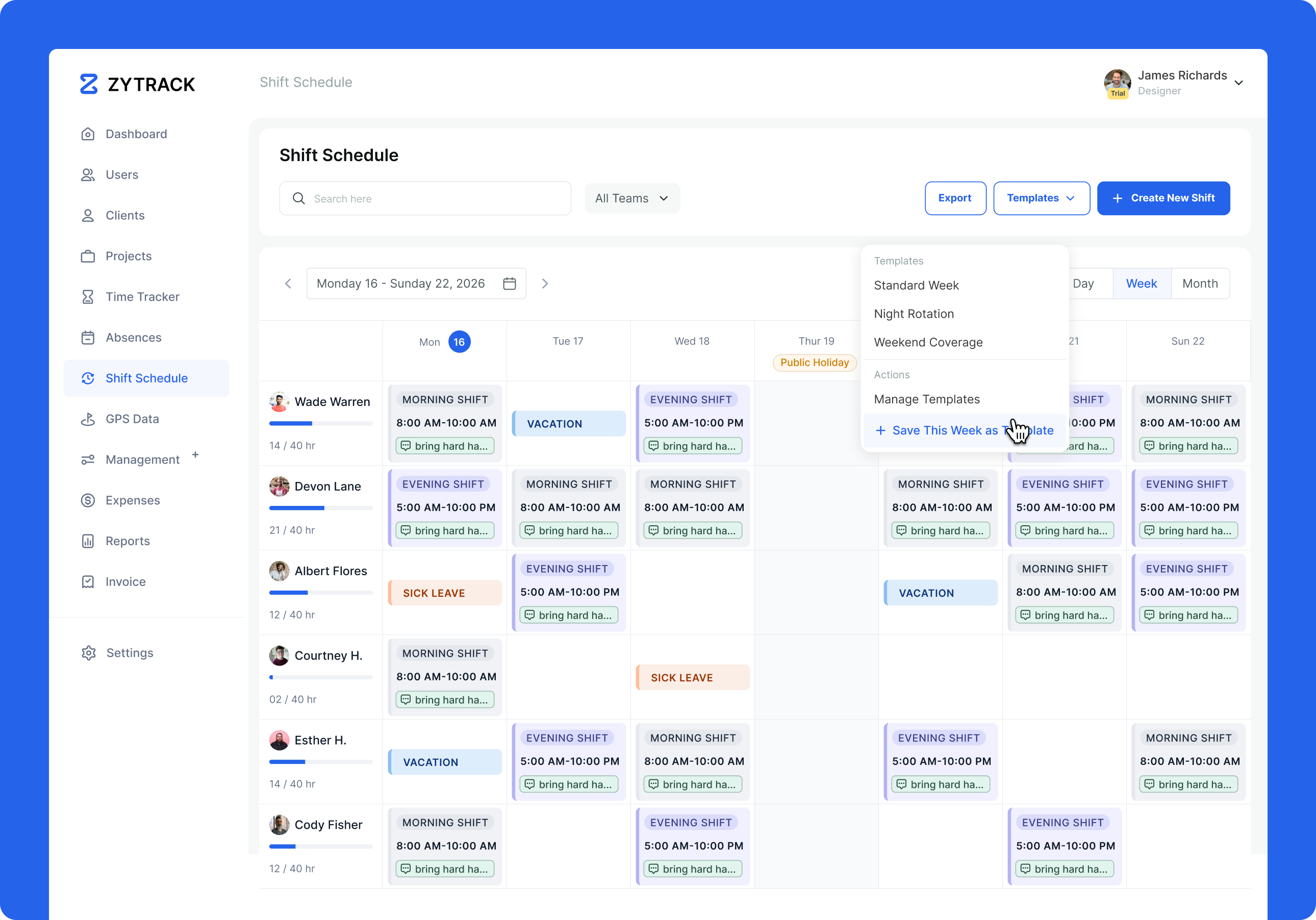
I designed the schedule around employees and days, making it easy for managers to see who is working, how many hours they have scheduled, and where conflicts or absences exist.
02 Designing the shift experience
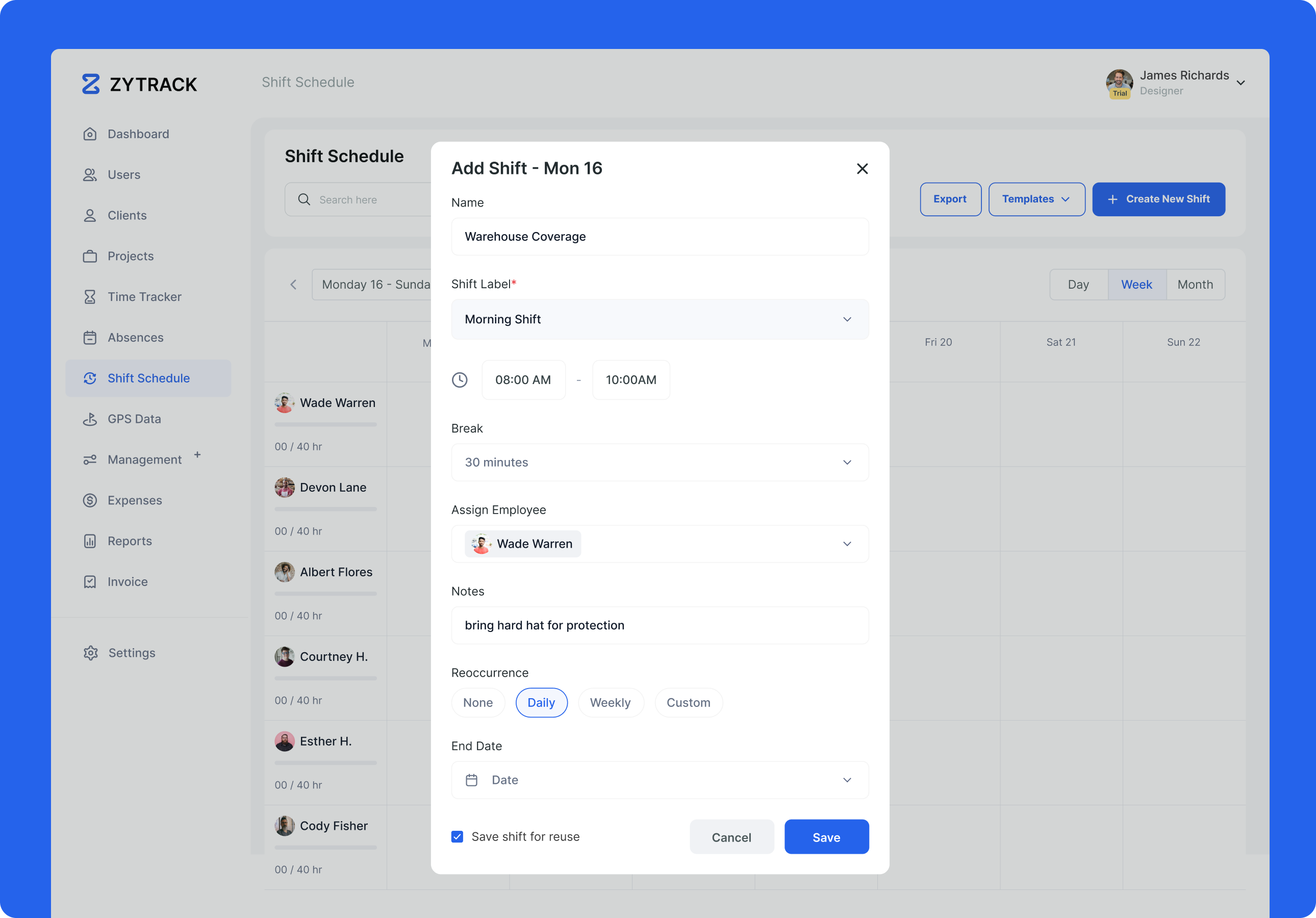
For each shift, I focused on showing the most important information at a glance: shift name, time, employee, label, and notes, while keeping deeper details inside the edit flow.
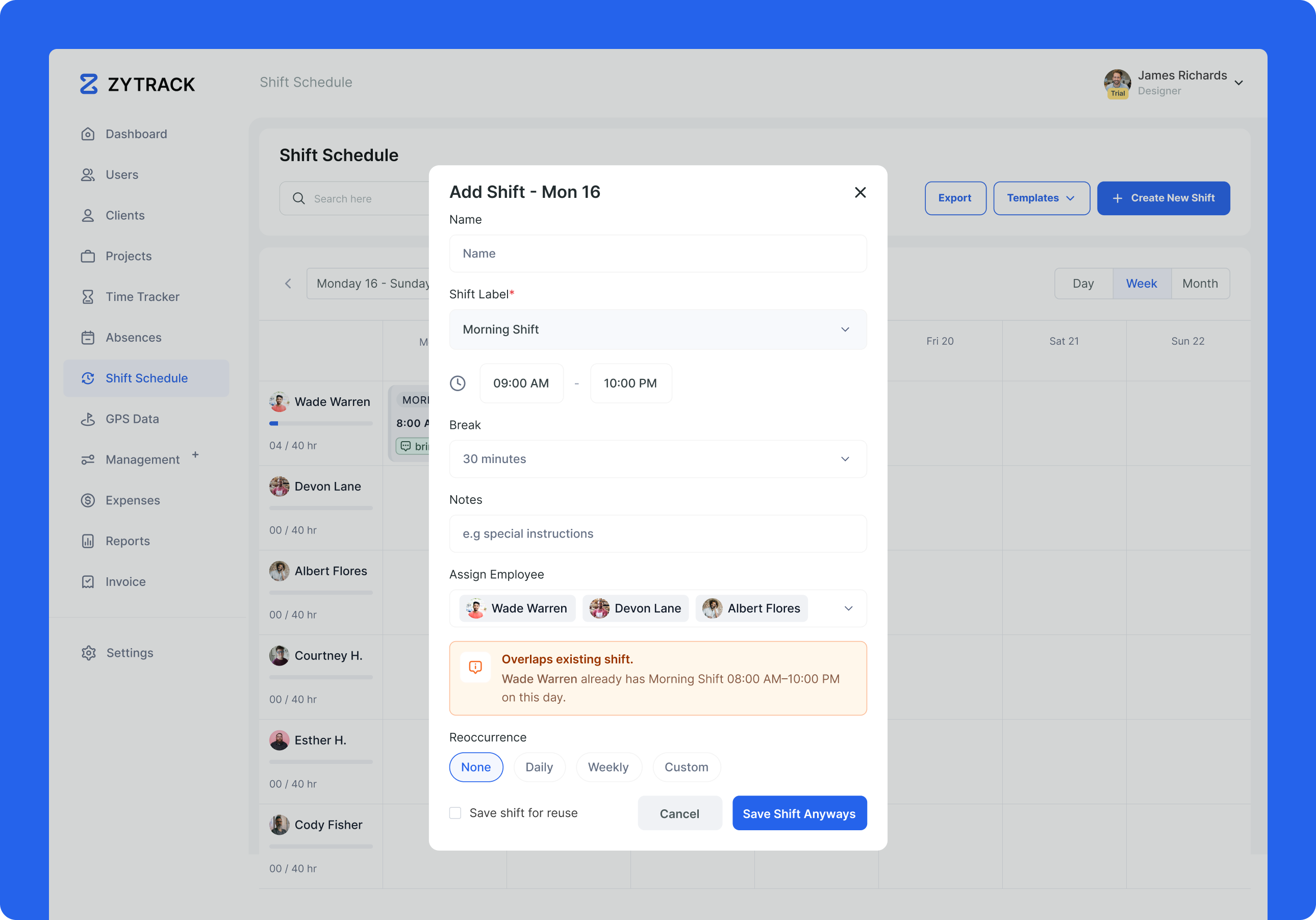
I used progressive disclosure for more complex functionality such as recurring shifts, keeping the basic creation flow simple while still supporting advanced scheduling needs.
03 Reducing repetitive work
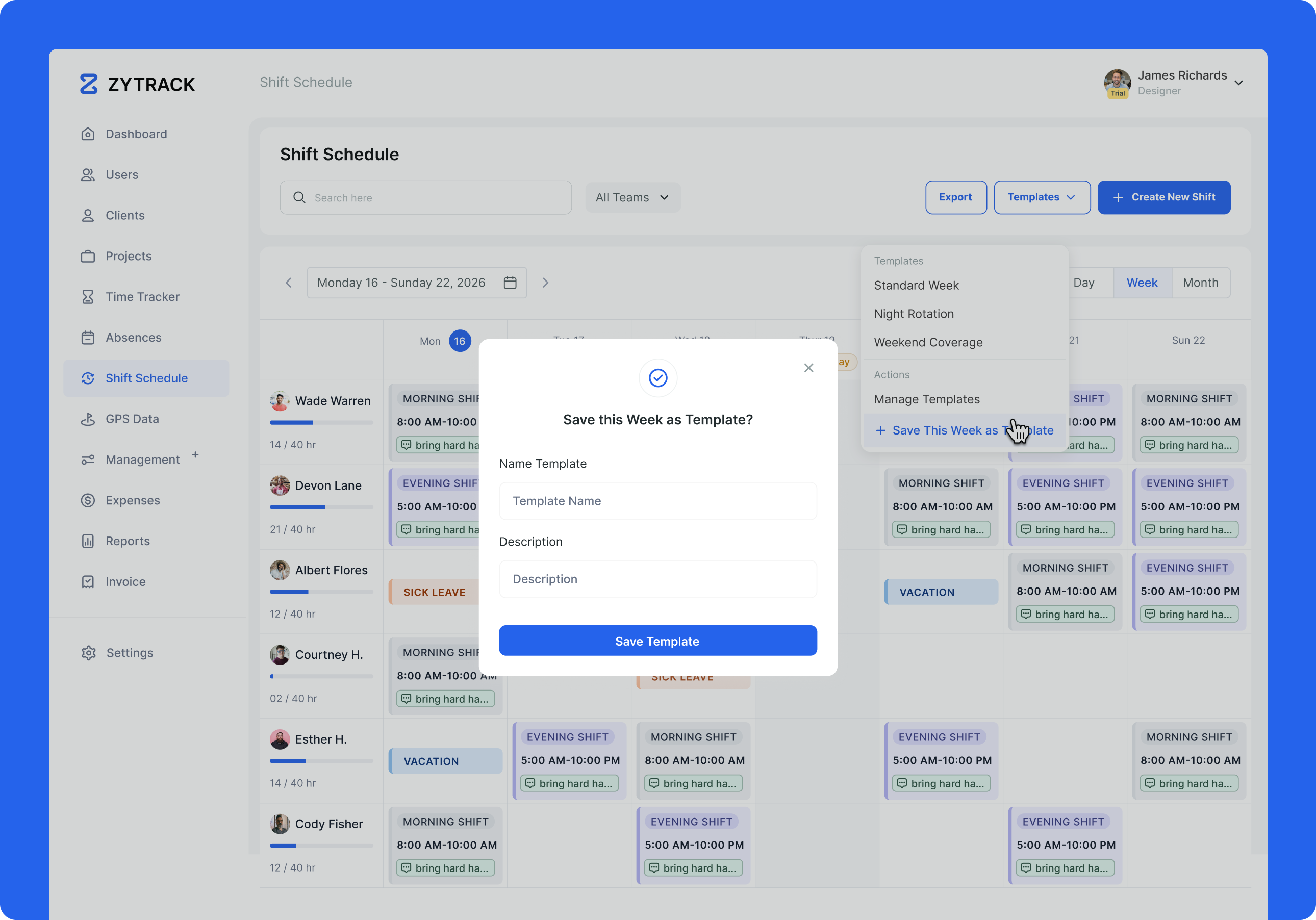
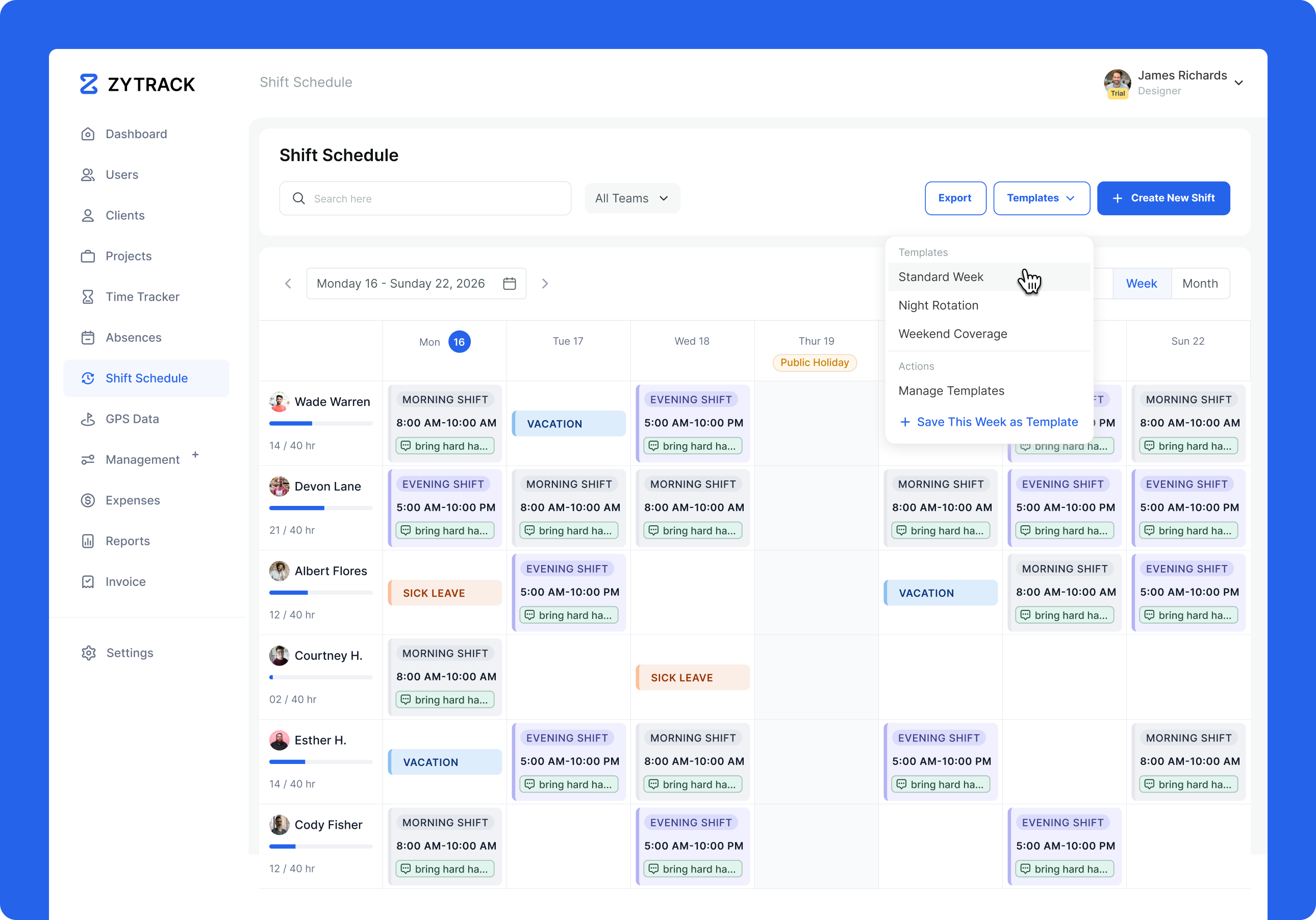
Since scheduling is repetitive, I introduced weekly templates that allow managers to save an existing week and reuse it for another period. This reduces the need to recreate schedules manually.
I also designed the template experience to make applying and managing saved schedules straightforward.
04 Designing for real scheduling conditions
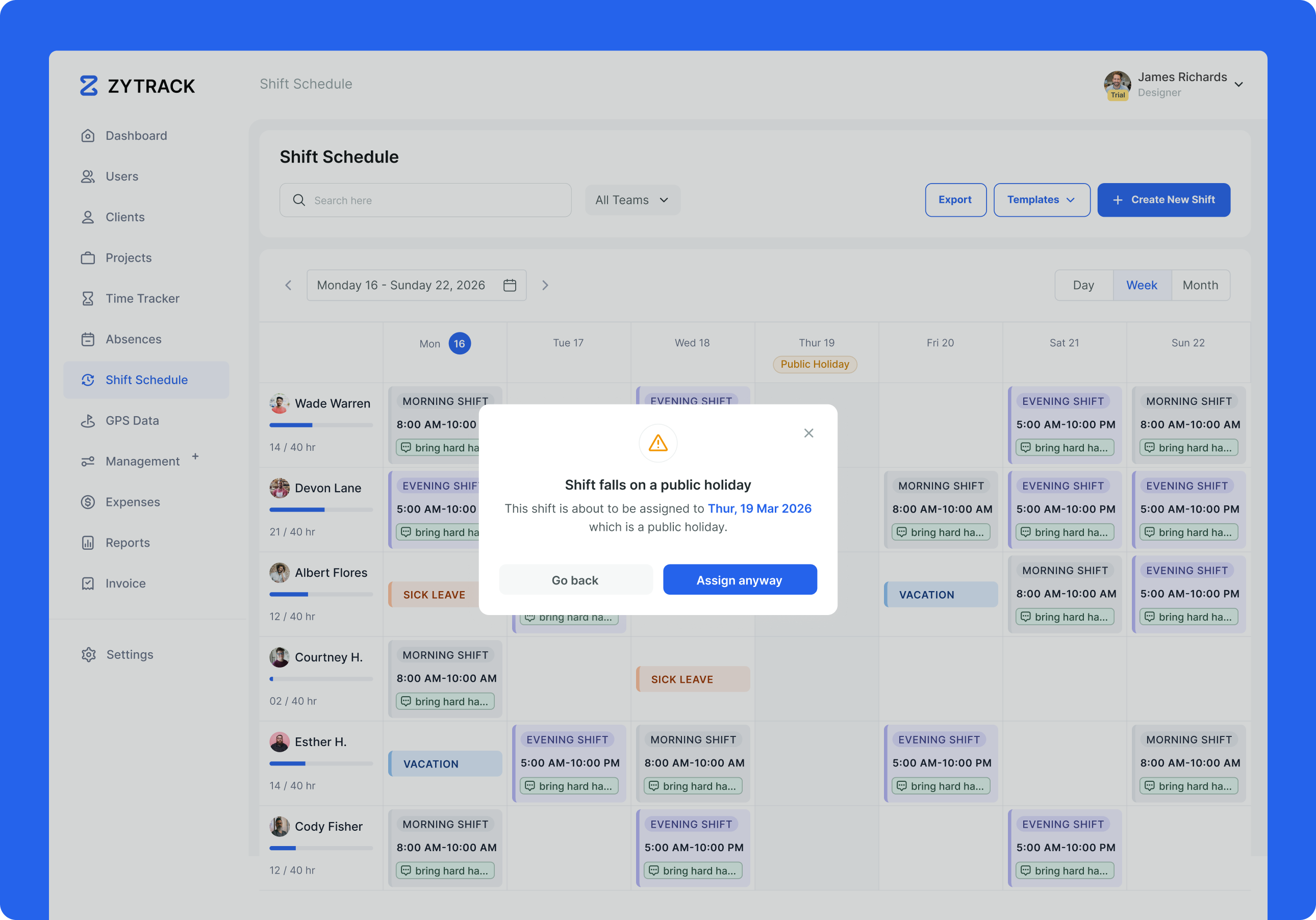
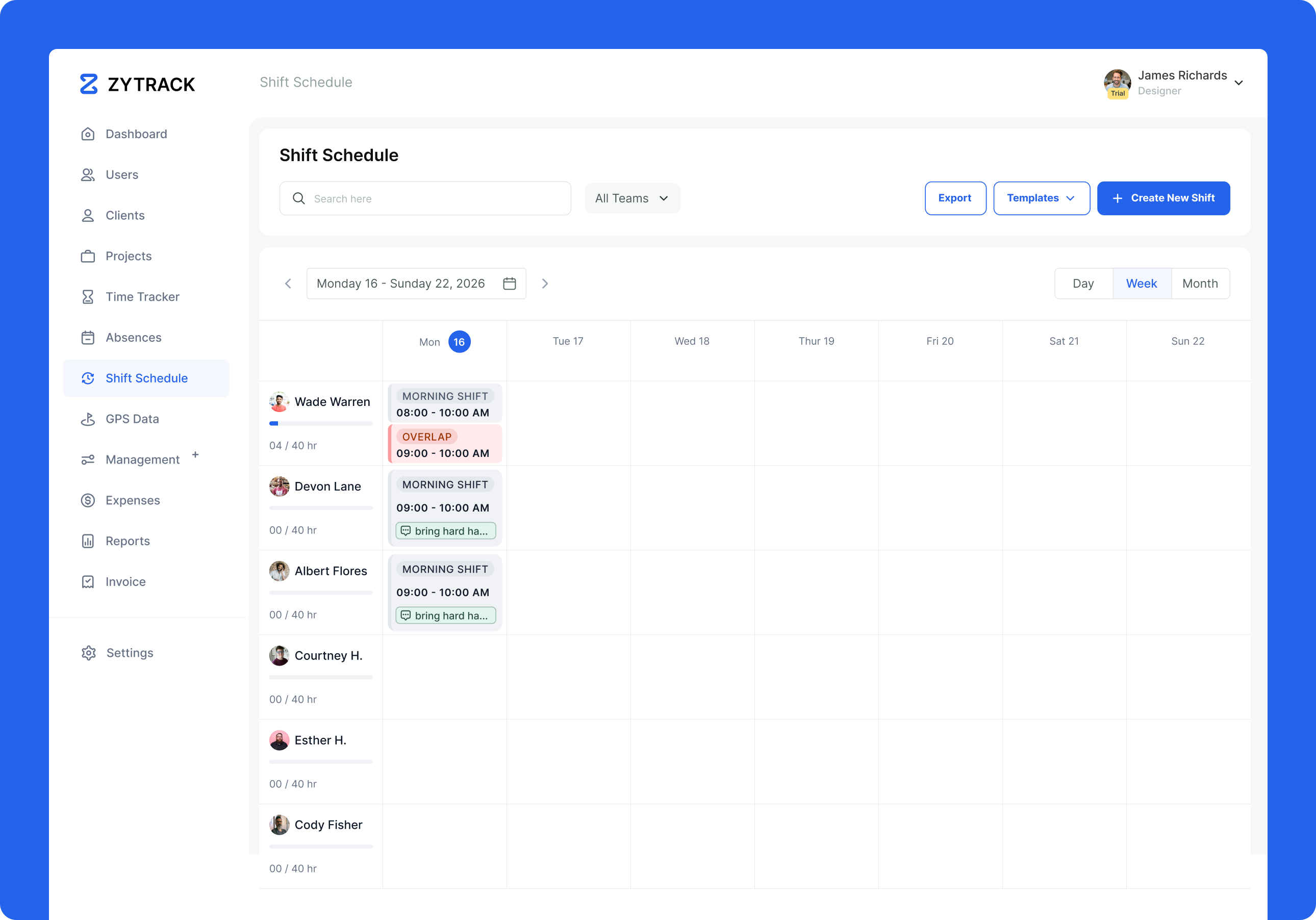
I treated holidays, absences, overlapping shifts, and maximum shift lengths as contextual warnings rather than hard blockers. This gives managers the information they need while still allowing them to make the final decision.
05 Extending the workflow
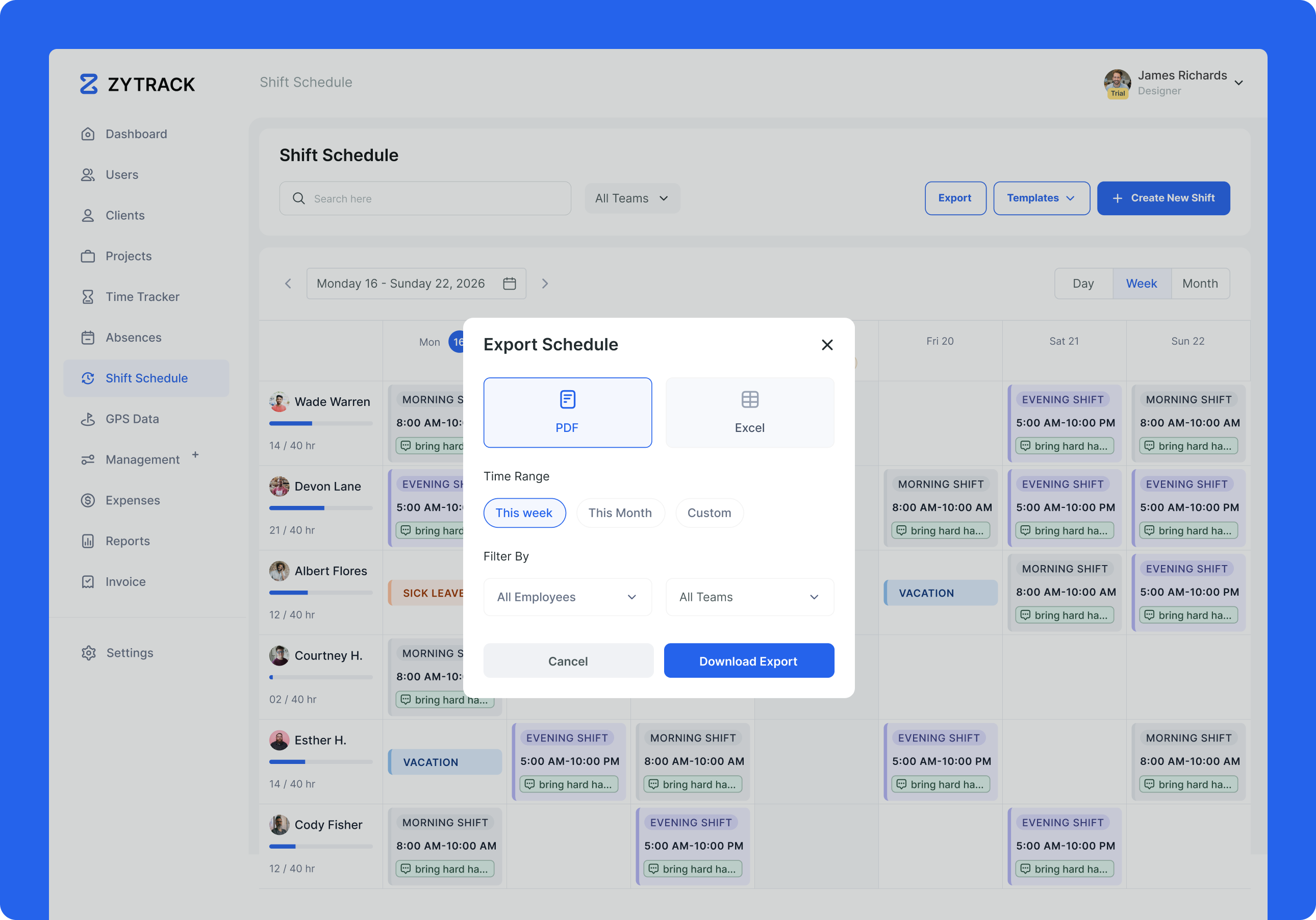
I designed exports as part of the scheduling workflow, allowing schedules to be exported with company information and total employee hours for operational use.
Overall, the direction was to make scheduling clear, repeatable, and scalable, while staying consistent with Zytrack's existing product experience.